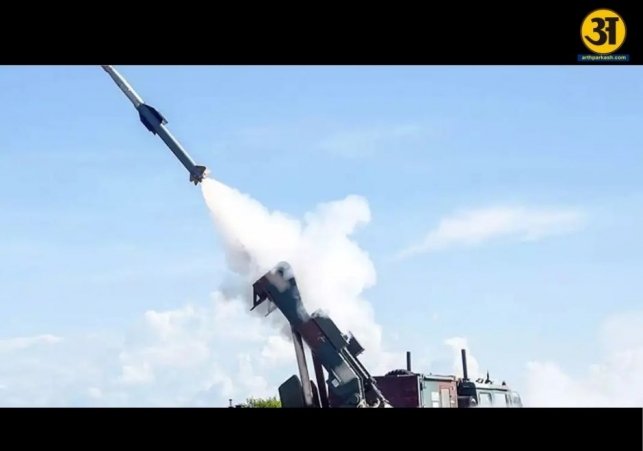
India to acquire Anantshastra QRSAM air defence system
All about Anantshastra QRSAM: India’s new air defence system soon to be acquired
New Delhi: The Indian Army is taking a major step to strengthen its air defence capabilities with the induction of a new missile system called Anantshastra. This Quick Reaction Surface-to-Air Missile (QRSAM) system is designed to protect soldiers and equipment from enemy aircraft, helicopters, drones, and precision-guided weapons. The Indian Army has recently issued a Request for Proposal (RFP) to acquire this advanced system, signaling a significant move towards self-reliance and modernisation in defence technology.
Anantshastra is not just another missile system. It represents India’s focus on developing homegrown technology under the Atmanirbhar Bharat initiative. Once deployed, it will provide mechanised and armoured units with the confidence to operate freely on the battlefield, knowing their skies are monitored and defended against aerial threats.
What is Anantshastra and how will it work
Anantshastra is a modern air defence system built to meet the Indian Army’s specific needs. It will act as a protective shield for tanks, infantry combat vehicles, and artillery units. The system is designed to detect, track, and destroy enemy aircraft, helicopters, drones, loitering munitions, rockets, and other aerial threats. Mounted on 8x8 high-mobility vehicles, it can move alongside mechanised formations, even in challenging terrains like deserts, mountains, and plains.
The system features 360-degree surveillance radars, automated command and control systems, and all-weather tracking capabilities. It is also designed to resist electronic jamming, ensuring precise targeting even under intense enemy countermeasures. Armed with pre-fragmented warheads and solid-fuel propulsion, Anantshastra integrates with the Army’s Akashteer Command and Control network, providing a seamless air defence solution.
The combat zone known as the air littoral – low to mid-altitude airspace up to 10 km – is particularly dangerous for soldiers and equipment. Enemy jets, helicopters, and drones often operate in this zone. During past operations like Operation Sindoor, India’s air defence acted as a wall against aerial threats. Anantshastra will strengthen this wall further, giving troops enhanced security and quick reaction capability in this critical airspace.
Scale, deployment, and significance
The Indian Army plans to raise three full regiments of Anantshastra, which includes nine units comprising 36 missiles and 36 radars. The total project is valued at nearly Rs 30,000 crore, making it one of the largest Army Air Defence initiatives in recent years. The deployment will focus on India’s most sensitive western and northern borders, ensuring mechanised formations face minimum risk from enemy aerial strikes from Pakistan or China.
Anantshastra is significant because it replaces older air defence systems like OSA-AK, which are slower and less effective against modern threats. With faster reaction times, greater mobility, and advanced targeting capabilities, Anantshastra will allow India to dominate its airspace during conflicts and protect frontline soldiers more efficiently.
Developed indigenously by DRDO with support from Bharat Electronics Limited (BEL) and Bharat Dynamics Limited (BDL), Anantshastra reflects India’s push for self-reliance in defence technology. Unlike imported systems, it has been designed specifically for India’s battlefield conditions, from desert sands to high-altitude mountain regions.
Key features of Anantshastra include:
-
Ability to destroy aerial threats at ranges of 30–40 km and altitudes of 6–10 km.
-
High mobility on 8x8 vehicles for rapid deployment with mechanised forces.
-
360-degree surveillance, automated command and control, and all-weather tracking.
-
Resistance to electronic jamming while maintaining targeting precision.
-
Pre-fragmented warheads and integration with the Army’s Akashteer network.
ALSO READ: Why Indian elections face fairness challenges despite being largely free
Once deployed, Anantshastra will serve as both a shield and a deterrent. It will protect India’s troops and equipment from modern aerial threats, including drones and precision weapons, while sending a clear message to adversaries that Indian airspace is secure.
The induction of Anantshastra marks a milestone for India’s defence forces, showing a commitment to modern, indigenous, and highly effective technology. It not only enhances battlefield security but also strengthens India’s overall military posture, ensuring that soldiers can operate with confidence knowing that advanced air defence systems are watching over them.
With three regiments planned along sensitive borders, the Anantshastra QRSAM system is set to become a key part of India’s aerial defence strategy, combining modern technology, mobility, and precise combat capabilities. It is a major step forward for the Indian Army as it adapts to the challenges of modern warfare and continues to protect the nation’s frontlines with cutting-edge systems.
Related News